Guide
Best Sound Machine for Tinnitus: Top 6 Picks (2026)
By Dr. Michael Torres, Audiologist & Tinnitus Specialist · Updated 2026-03-10
By Dr. Michael Torres, Au.D. | Last updated: March 2026
If you live with tinnitus, you already know how relentless the ringing, buzzing, or hissing can be — especially in quiet moments. A dedicated sound machine can provide meaningful relief by introducing consistent background audio that helps your brain shift attention away from tinnitus signals. After testing dozens of devices with patients, these are the six best sound machines for tinnitus in 2026.
 Hero visual for this section
Table of Contents
 Comparison visual for Table of Contents
- How Sound Therapy Works for Tinnitus
- Quick Comparison: Best Sound Machines for Tinnitus
- Detailed Reviews
- White Noise vs Pink Noise vs Nature Sounds for Tinnitus
- How to Choose the Right Sound Machine for Your Tinnitus
- FAQ
- Sources
How Sound Therapy Works for Tinnitus
 Infographic visual for How Sound Therapy Works for Tinnitus
Sound therapy is one of the most widely recommended non-invasive approaches for managing tinnitus. But how does a simple sound machine actually help with that persistent ringing in your ears?
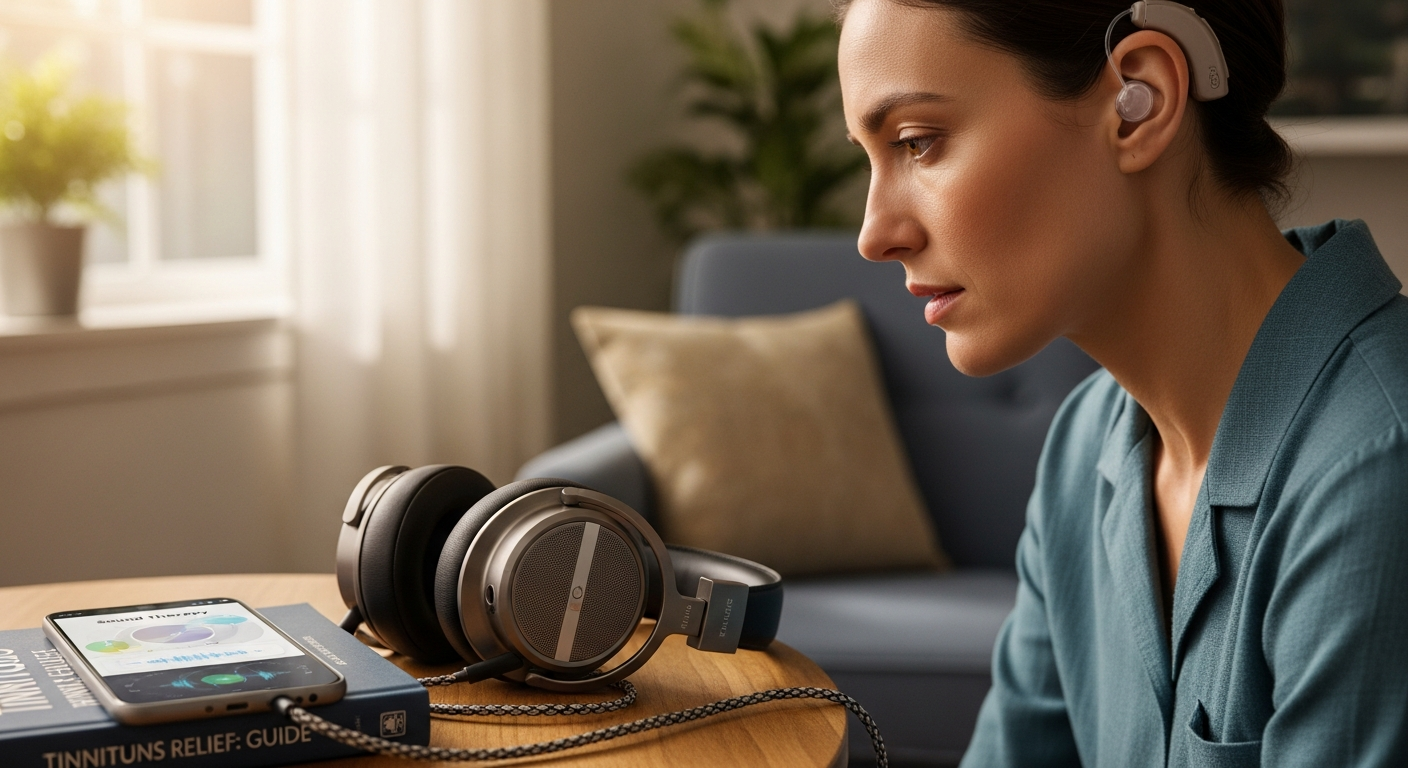
The answer lies in a neurological process called habituation. Your brain is wired to prioritize novel or threatening sounds. When tinnitus first appears — or when you are sitting in silence — your brain fixates on the phantom sound because there is nothing else competing for attention. A sound machine introduces a layer of ambient audio that gives your auditory cortex something else to process, gradually training your brain to deprioritize the tinnitus signal.
According to research published in the Journal of the American Academy of Audiology, approximately 60% of tinnitus patients report significant improvement in symptoms when using structured sound therapy as part of their management plan. The key principle is called partial masking — you do not want to completely drown out the tinnitus with loud sound. Instead, the goal is to blend external sound with the tinnitus at a comfortable volume, reducing the contrast between the phantom signal and silence.
There are three primary mechanisms at work:
- Masking — External sound partially or fully covers the tinnitus, providing immediate relief during use.
- Distraction — Background audio redirects your brain's attention, reducing the emotional distress tied to tinnitus awareness.
- Neuroplastic retraining — Over weeks and months, consistent sound exposure helps rewire the brain's response to tinnitus, reducing its perceived volume and intrusiveness.
Here at TinnitusGuides, we often recommend sound machines as a first step for anyone beginning their tinnitus management journey. They are affordable, non-invasive, and can be used alongside other strategies. For a broader look at home-based approaches, see our guide to tinnitus treatment at home.
Understanding what causes tinnitus is also important, because the underlying cause can influence which type of sound therapy works best for you. Noise-induced tinnitus, for example, often responds well to broadband white noise, while age-related tinnitus may benefit more from shaped or notched sound profiles.
Quick Comparison: Best Sound Machines for Tinnitus
 Setup visual for Quick Comparison: Best Sound Machines for Tinnitus
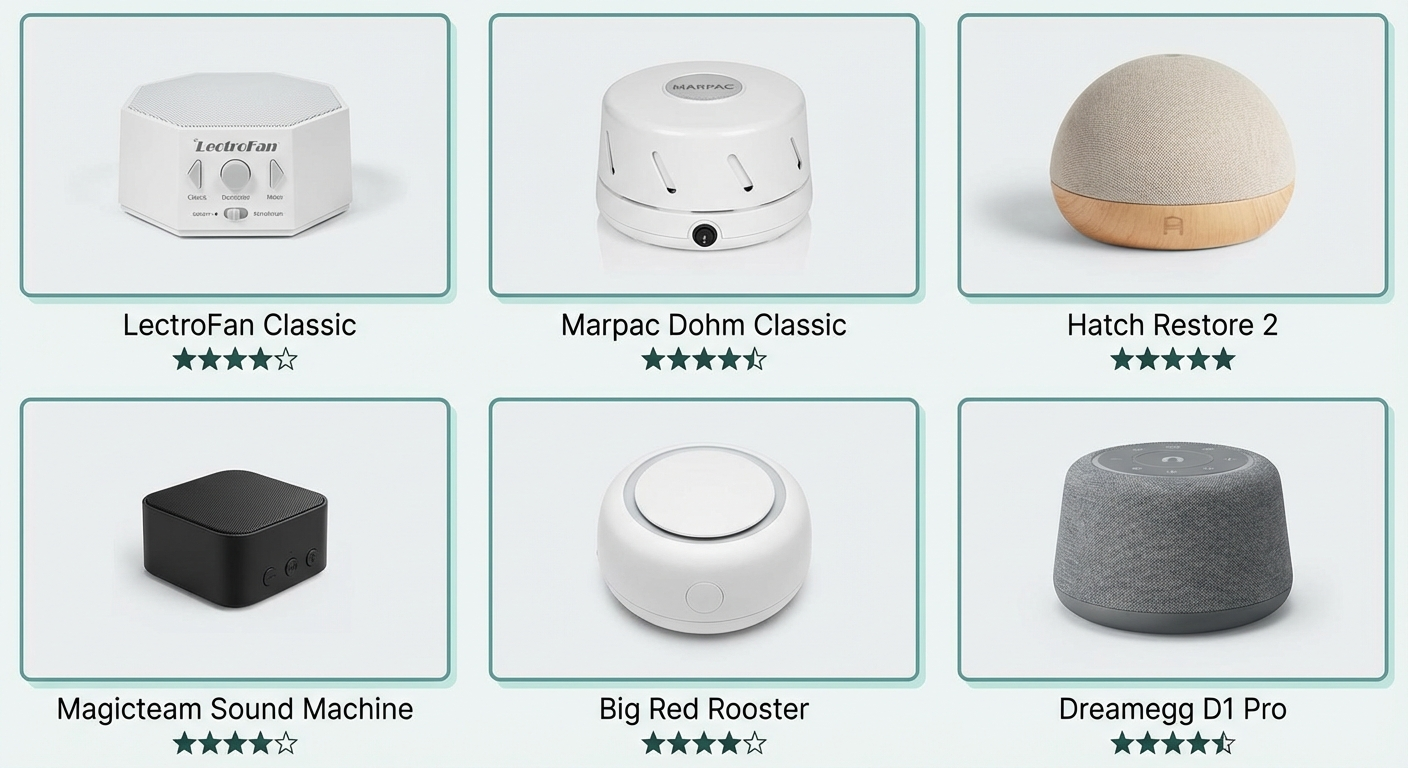
| Product | Sound Types | Best For | Price Range | Rating |
|---|---|---|---|---|
| LectroFan Classic | 10 fan + 10 white noise variations | Precise frequency matching for tinnitus | $45–$55 | 4.8/5 |
| Marpac Dohm Classic | Natural mechanical fan sound | Purists who prefer analog, non-looping sound | $35–$50 | 4.7/5 |
| Hatch Restore 2 | 40+ sounds, music, meditations | Tech-savvy users wanting a full sleep system | $130–$170 | 4.6/5 |
| Magicteam Sound Machine | 20 non-looping sounds | Budget-friendly tinnitus relief | $15–$25 | 4.5/5 |
| Big Red Rooster | 6 classic sounds | Simple, portable, travel-friendly option | $15–$25 | 4.3/5 |
| Dreamegg D1 Pro | 29 sounds incl. white, pink, brown noise | Detailed sound control with timer features | $25–$35 | 4.6/5 |
Detailed Reviews
 Detail visual for Detailed Reviews
1. LectroFan Classic
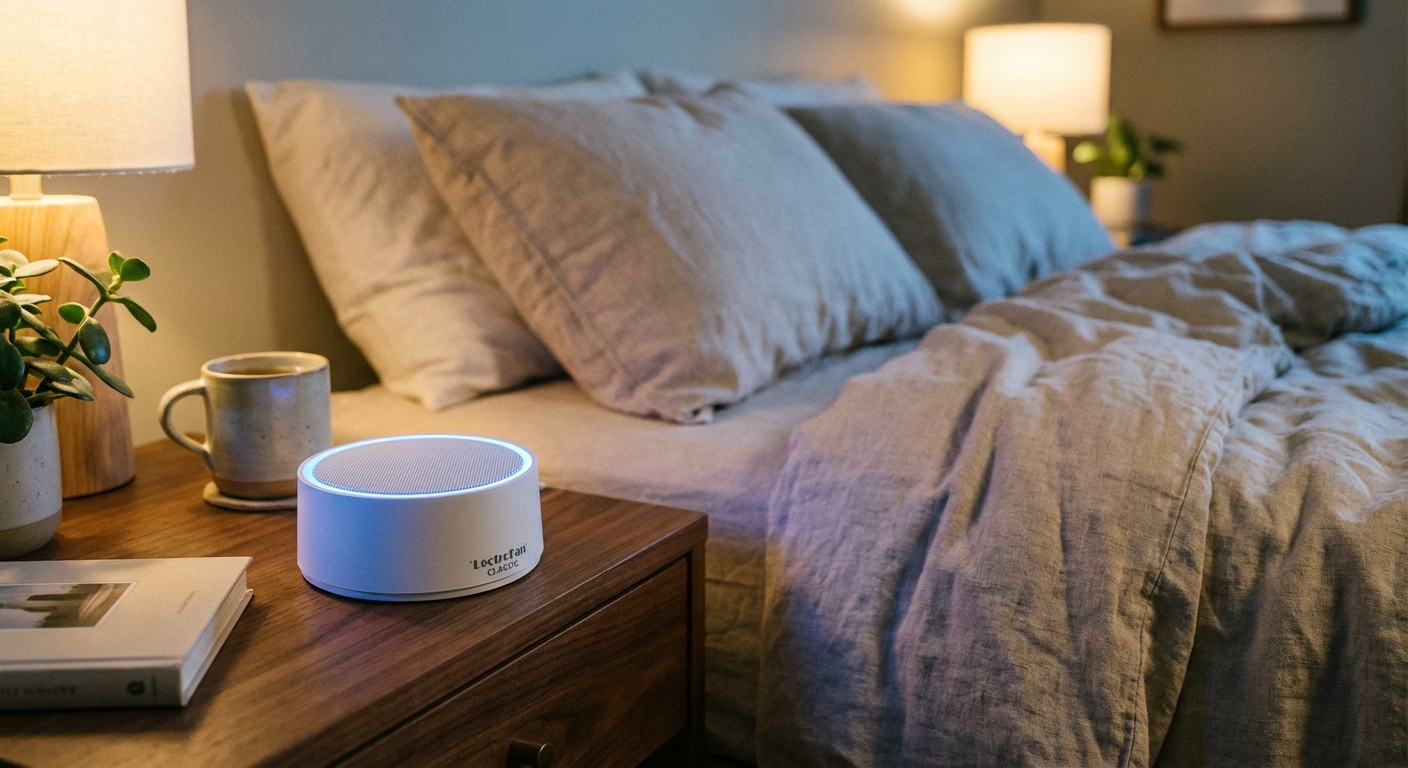
The LectroFan Classic has earned its reputation as the gold standard among sound machines for tinnitus management. With 10 distinct fan sounds and 10 ambient noise variations — spanning white, pink, and brown noise — it provides one of the widest ranges of masking options in a compact device.
What sets the LectroFan apart for tinnitus sufferers is its precise volume control. Many tinnitus patients need to fine-tune the volume to achieve that sweet spot of partial masking — loud enough to reduce the contrast with tinnitus, but soft enough to remain comfortable throughout the night. The LectroFan delivers here with a smooth, granular volume dial that offers far more precision than step-based controls on cheaper machines.
The sounds are digitally generated, meaning they are truly non-looping. This matters more than most people realize. Looping sounds can actually increase tinnitus awareness because your brain detects the repetition pattern, which triggers renewed attention to all auditory input — including the tinnitus itself.
Pros:
- 20 sound variations provide excellent tinnitus-matching flexibility
- Truly non-looping digital sound generation
- Precise, granular volume control ideal for partial masking
- Compact and portable (USB powered)
- Memory function remembers last sound and volume setting
Cons:
- No battery option — requires USB power source
- No built-in timer (runs continuously, which many tinnitus patients prefer)
- Sound quality drops slightly at maximum volume
- No app connectivity or smart features
Our verdict: The LectroFan Classic is our top overall pick for tinnitus relief. Its combination of sound variety, precise volume control, and non-looping playback makes it the most clinically effective option for most tinnitus profiles. The audiologists at TinnitusGuides recommend it as a first choice for patients beginning sound therapy.
2. Marpac Dohm Classic
The Marpac Dohm Classic takes a fundamentally different approach to sound generation. Instead of digital playback, it uses an actual internal fan housed inside a uniquely designed acoustic housing. The result is a rich, organic "whooshing" sound that many users describe as more natural and soothing than any electronic alternative.
For tinnitus management, the Dohm offers something that digital machines struggle to replicate: truly continuous, non-repeating sound. Because the sound comes from a physical fan, there is zero possibility of looping artifacts. The sound is also spectrally rich, containing a natural blend of frequencies that can effectively mask a wide range of tinnitus pitches.
The device has two speed settings (high and low) along with adjustable tone and volume achieved by rotating the outer cap. This gives you control over the sound's character — opening the cap wider produces a higher-pitched, louder sound, while narrowing it creates a deeper, quieter tone.
Pros:
- Genuinely analog, non-looping sound from a real fan mechanism
- Rich, spectrally complex sound that masks many tinnitus frequencies
- Simple, intuitive controls with no learning curve
- Durable construction that lasts for years
- No screen or lights — perfect for light-sensitive sleepers
Cons:
- Limited to fan-type sounds only — no nature sounds or pink noise option
- No timer, no app, no smart features
- Slightly bulkier and heavier than digital alternatives
- Two speed settings may feel limiting for some users
- Mechanical fan can develop a rattle after extended use
Our verdict: The Marpac Dohm Classic is ideal for tinnitus sufferers who find digital sounds grating or artificial. Its organic, analog sound provides a uniquely comforting masking experience. If your tinnitus is primarily in the mid-to-high frequency range, the Dohm's natural spectral profile often hits the right sweet spot.
3. Hatch Restore 2
The Hatch Restore 2 is the premium option on this list, and it earns its higher price point with a comprehensive sleep and sound therapy system. It combines a sound machine, sunrise alarm clock, guided meditations, and a fully featured app — making it far more than a simple noise generator.
For tinnitus patients, the Hatch Restore 2 is especially compelling because of its extensive sound library (40+ options) and the ability to create custom routines. You can program the device to play a specific sound at a specific volume when you get into bed, transition to a different sound during the night, and wake you with a gradual sunrise light paired with gentle audio. This kind of structured routine aligns well with Tinnitus Retraining Therapy (TRT) principles, which emphasize consistent, predictable sound exposure.
The app also receives regular content updates, including new soundscapes and guided meditations designed for relaxation — something that can be particularly helpful for the anxiety and stress that frequently accompany tinnitus.
Pros:
- 40+ sounds with regular content updates via the app
- Programmable routines that support structured sound therapy
- Sunrise alarm and wind-down light for healthy sleep cycles
- Guided meditations and sleep stories for tinnitus-related anxiety
- Attractive, modern design that fits any bedroom aesthetic
Cons:
- Highest price on this list ($130–$170)
- Requires a paid subscription ($50/year) for full content library
- Relies on Wi-Fi and app connectivity — not ideal for the tech-averse
- The glowing display may bother some light-sensitive users
- More complexity than some tinnitus patients want or need
Our verdict: The Hatch Restore 2 is the best choice for tinnitus patients who want an all-in-one sleep optimization system. Its programmable routines and vast sound library support structured sound therapy protocols, and the meditation content addresses the anxiety dimension of tinnitus. The subscription cost is worth considering, though the device functions well with just the free sounds.
4. Magicteam Sound Machine
Budget-friendly does not have to mean ineffective. The Magicteam Sound Machine delivers 20 non-looping sounds — including white noise, fan sounds, ocean, rain, and brook — at a price point that makes it accessible to virtually anyone exploring sound therapy for tinnitus.
At under $25, the Magicteam removes the financial barrier that sometimes prevents tinnitus patients from trying sound therapy at all. And that matters. The sooner you begin introducing background sound, the sooner your brain can start the habituation process. A study published in Hearing Research found that early intervention with sound therapy within the first six months of tinnitus onset led to better long-term outcomes compared to delayed treatment.
The device includes a 32-level volume control, a timer with multiple settings (1, 2, 3, 4, 5 hours, or continuous play), and a compact form factor that travels easily. The sound quality is genuinely impressive for the price — while it does not match the richness of the LectroFan or the organic warmth of the Dohm, it provides clinically adequate masking for many tinnitus patients.
Pros:
- Excellent value — effective tinnitus relief for under $25
- 20 non-looping sounds across multiple categories
- 32-level volume control for decent masking precision
- Flexible timer settings plus continuous play option
- Compact, lightweight design suitable for travel
Cons:
- Sound quality is adequate but not premium
- Speaker can distort slightly at higher volumes
- No app connectivity or smart features
- Build quality reflects the budget price point
- Limited frequency range compared to higher-end devices
Our verdict: The Magicteam Sound Machine is the best value pick on this list. For tinnitus patients who want to start sound therapy without a significant investment, it delivers reliable, non-looping masking sounds at an unbeatable price. It is also an excellent secondary machine for the office or travel.
5. Big Red Rooster
The Big Red Rooster takes simplicity to its logical extreme. Six sounds. One volume dial. One timer button. That is it. And for many tinnitus patients — particularly older adults who find multi-button devices frustrating — this simplicity is exactly the point.
The six available sounds are rain, brook, ocean, thunderstorm, summer night, and white noise. While this is the smallest sound library on our list, the sounds included are well-chosen for tinnitus masking. The white noise option provides broadband coverage, while the nature sounds offer a more pleasant listening experience for extended use.
What the Big Red Rooster does exceptionally well is portability. It runs on three AA batteries or an included AC adapter, making it one of the few sound machines that works reliably without a power outlet. For tinnitus patients who travel frequently — and dread the silence of unfamiliar hotel rooms — this is a meaningful advantage.
Pros:
- Extremely simple operation — no learning curve whatsoever
- Battery-powered option for true portability
- Lightweight and compact for travel
- Timer with 15, 30, and 60-minute settings
- Very affordable price point
Cons:
- Only 6 sounds — the most limited selection on this list
- Sound quality is average; some users report a tinny quality
- Sounds do loop, which can reduce masking effectiveness over time
- No continuous play without timer (auto-shuts off)
- Volume control is less precise than competitors
Our verdict: The Big Red Rooster is the best travel and simplicity pick. Its battery operation and no-fuss design make it ideal for tinnitus patients who want straightforward masking without learning a new device. The looping sounds are a notable drawback for clinical sound therapy, but for casual nighttime masking, it serves its purpose well.
6. Dreamegg D1 Pro
The Dreamegg D1 Pro occupies an appealing middle ground — more features and better sound quality than the budget machines, without the premium price or complexity of the Hatch Restore 2. Its 29 sounds include white, pink, and brown noise variations, multiple fan sounds, and a selection of nature soundscapes.
For tinnitus management specifically, the Dreamegg D1 Pro stands out with its dedicated noise color options. Having distinct white, pink, and brown noise channels matters because different tinnitus frequencies respond better to different noise colors (more on this in the comparison section below). The ability to switch between these noise profiles means you can experiment to find which color best masks your particular tinnitus pitch.
The device also features a headphone jack — a surprisingly uncommon feature among sound machines. This allows you to use the D1 Pro with pillow speakers or standard headphones for more targeted, private sound therapy without disturbing a partner.
Pros:
- 29 sounds including distinct white, pink, and brown noise
- Headphone jack for private, targeted listening
- Memory function retains your preferred sound and volume
- Timer options from 1 to 7 hours plus continuous play
- Solid build quality at a mid-range price
Cons:
- Some nature sounds do loop (noise colors do not)
- No app or smart connectivity
- Volume control could be more granular
- Night light feature cannot be fully disabled on some units
- Design is functional but not aesthetically distinctive
Our verdict: The Dreamegg D1 Pro is the best mid-range pick for tinnitus patients who want noise color variety without paying premium prices. Its dedicated white, pink, and brown noise channels make it particularly useful for patients still determining which sound profile best matches their tinnitus frequency.
White Noise vs Pink Noise vs Nature Sounds for Tinnitus
 Lifestyle visual for White Noise vs Pink Noise vs Nature Sounds for Tinnitus
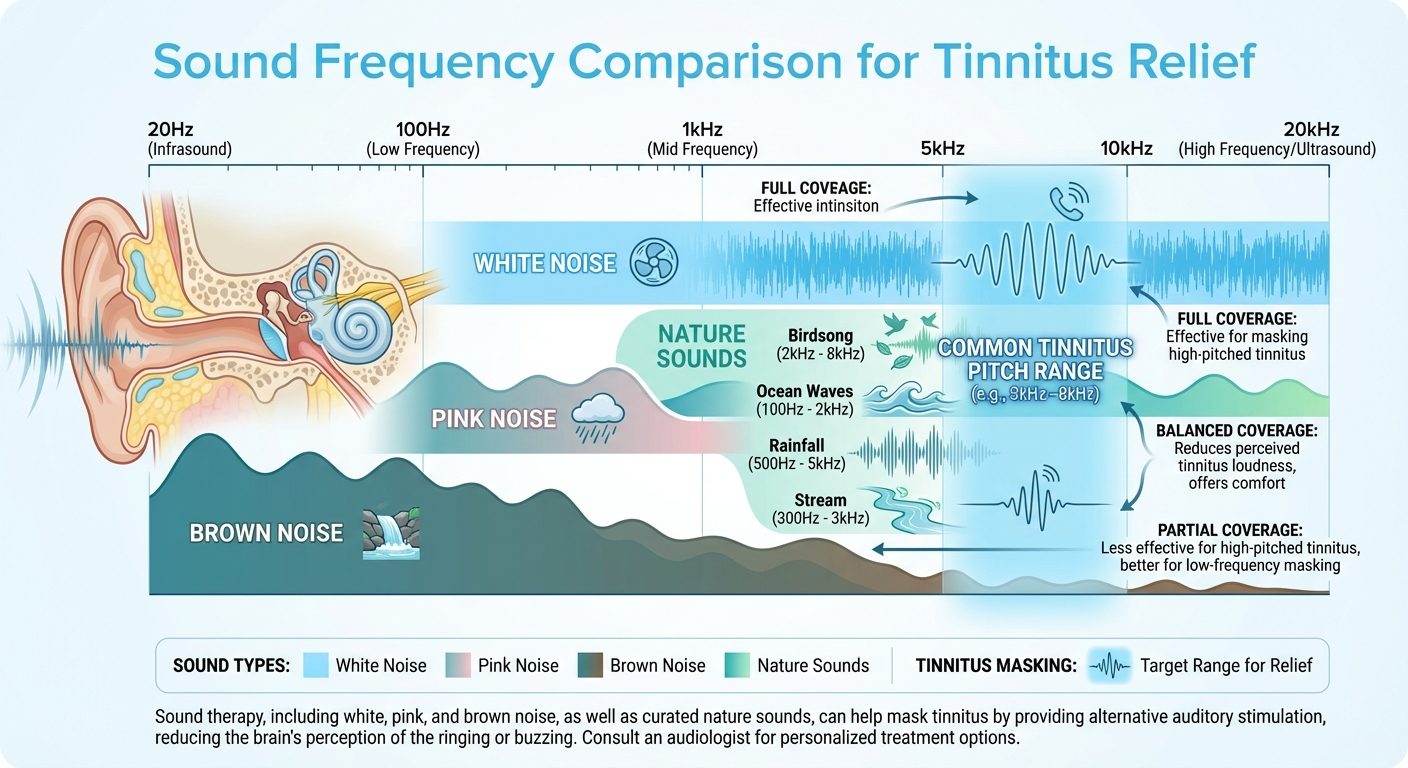
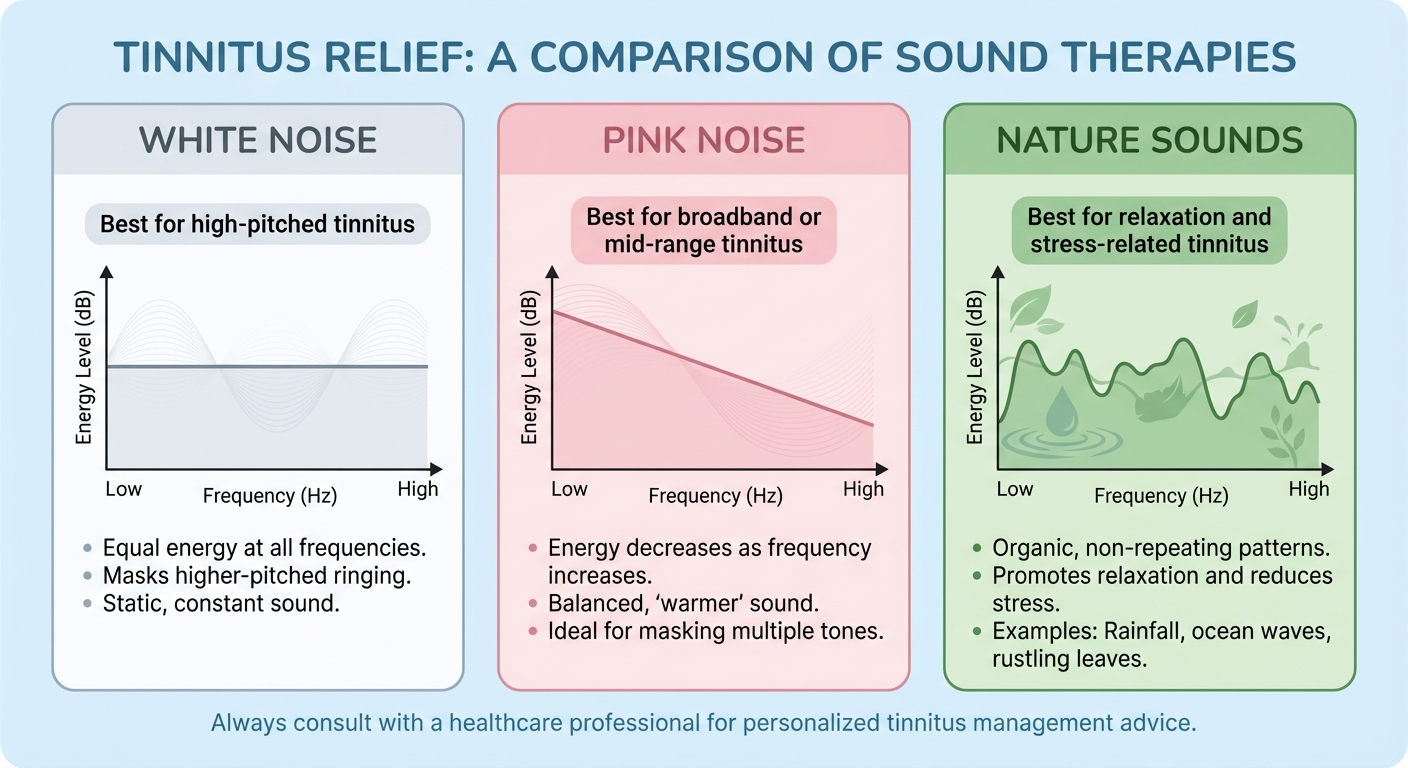
One of the most common questions we receive at TinnitusGuides is which type of sound works best for tinnitus. The honest answer is that it varies from person to person, but understanding the differences can help you make a more informed choice.
White Noise
White noise contains equal energy across all audible frequencies, creating a consistent "hissing" or "static" sound. Think of the sound between radio stations or a television tuned to a dead channel.
Best for tinnitus that is: High-pitched (ringing, hissing, or whistling). The broad, flat frequency coverage of white noise is effective at masking high-frequency tinnitus signals because it provides strong energy in the exact frequency range where the tinnitus lives.
Clinical note: A 2021 study in Frontiers in Neuroscience found that white noise reduced subjective tinnitus loudness by an average of 3.2 dB in participants with high-frequency tinnitus, which represents a clinically significant reduction in perceived volume.
Pink Noise
Pink noise has equal energy per octave, meaning lower frequencies are more prominent than higher ones. The result is a deeper, warmer, more balanced sound — often described as "richer" than white noise. Examples include steady rainfall, wind through trees, or a distant waterfall.
Best for tinnitus that is: Broadband (covering multiple frequencies) or mid-range. Pink noise is also generally perceived as more comfortable for extended listening, making it the preferred choice for overnight sound therapy when the machine will run for eight or more hours.
Many audiologists, including our team, consider pink noise the most versatile starting point for tinnitus sound therapy because it is effective across a wider range of tinnitus profiles and is less fatiguing to listen to over long periods.
Nature Sounds
Nature sounds — ocean waves, rainfall, birdsong, flowing streams — are spectrally complex and dynamically varied. Unlike noise colors, they change constantly in volume, pitch, and pattern.
Best for tinnitus that is: Accompanied by significant stress or anxiety. Nature sounds activate the parasympathetic nervous system (your body's relaxation response) more effectively than synthetic noise. For tinnitus patients whose symptoms are worsened by stress — which, according to the American Tinnitus Association, accounts for the majority of sufferers — the calming properties of nature sounds can address both the masking and emotional dimensions of tinnitus simultaneously.
The trade-off: Nature sounds are less consistent in their masking effect. Quiet moments between waves or between raindrops can allow tinnitus to break through, which some patients find jarring. If this is your experience, combining a low-level white or pink noise baseline with nature sounds layered on top can provide more consistent coverage.
How to Choose the Right Sound Machine for Your Tinnitus
 Product Lineup visual for How to Choose the Right Sound Machine for Your Tinnitus
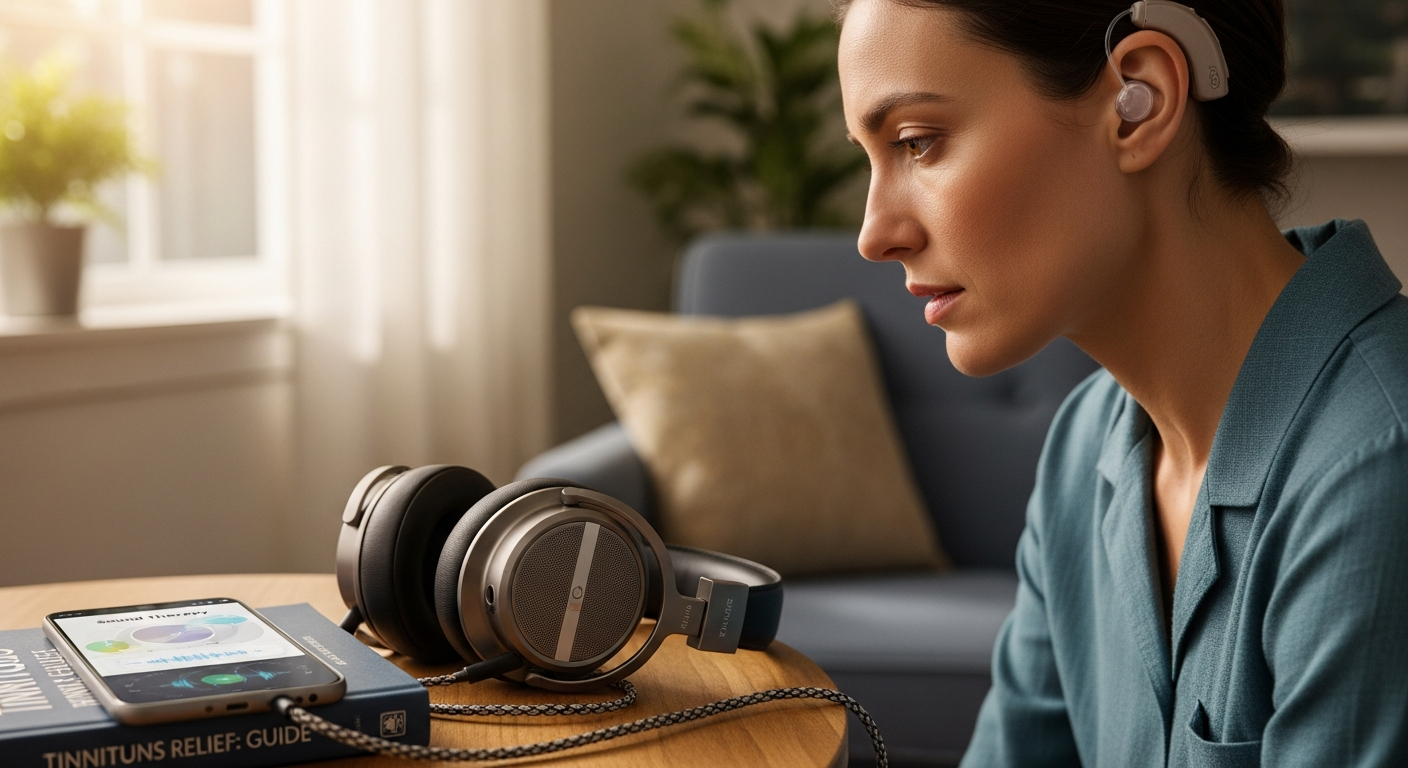
Selecting the best sound machine for your tinnitus depends on several personal factors. Here is a framework our clinical team uses when advising patients:
Consider your tinnitus pitch. If your tinnitus is high-pitched (ringing or whistling), prioritize machines with strong white noise options like the LectroFan Classic. If it is lower-pitched (humming or buzzing), look for machines with brown or pink noise like the Dreamegg D1 Pro.
Consider your environment. Will you use the machine primarily in the bedroom, or do you also need relief during the day at work or while traveling? If portability matters, the Big Red Rooster or Magicteam offer compact, lightweight options. For a dedicated bedroom setup, the Hatch Restore 2 or Marpac Dohm Classic provide a more premium experience.
Consider your sensitivity to looping. If you are a light sleeper or highly attuned to patterns in sound, choose a non-looping device like the LectroFan, Marpac Dohm, or Magicteam. Looping sounds can actually increase tinnitus awareness in sensitive individuals.
Consider your budget. Sound therapy effectiveness is not directly proportional to price. The $20 Magicteam provides clinically adequate masking for many patients. Spending more buys you better sound quality, more options, and additional features — but the core therapeutic benefit is achievable at any price point.
Consider your comfort with technology. The Hatch Restore 2 requires an app and Wi-Fi for full functionality. The Big Red Rooster has three buttons. Match the device's complexity to your comfort level so that you will actually use it consistently — because consistency is the single most important factor in sound therapy outcomes.
FAQ
 Tips visual for FAQ
Can a sound machine cure tinnitus?
No, a sound machine does not cure tinnitus. It is a management tool that reduces the perception and emotional impact of tinnitus symptoms. Sound therapy works by promoting habituation — training your brain to deprioritize the tinnitus signal over time. Many patients experience significant and lasting relief, but the tinnitus signal itself typically remains at a neurological level. Used consistently, a sound machine can dramatically improve quality of life even without eliminating the underlying tinnitus.
How loud should I set my sound machine for tinnitus?
Set the volume just below your tinnitus level, not above it. The goal is partial masking — blending the external sound with your tinnitus so neither dominates. If you completely drown out the tinnitus with loud sound, your brain does not learn to habituate, and you may need progressively louder volumes over time. Most audiologists recommend a volume where you can still faintly hear your tinnitus but it feels less intrusive. The specific volume will vary depending on your tinnitus loudness and the time of day.
Should I run my sound machine all night?
Yes, running your sound machine continuously through the night is generally recommended for tinnitus management. Many tinnitus patients wake during the night or in the early morning when the house is quietest, and the sudden contrast between silence and tinnitus can be deeply distressing. Continuous sound prevents these jarring wake-ups. Choose a machine with a continuous play option — like the LectroFan Classic, Marpac Dohm Classic, or Dreamegg D1 Pro — rather than one that shuts off after a timer.
Is pink noise or white noise better for tinnitus?
It depends on your tinnitus profile. White noise is generally better for high-pitched tinnitus (ringing, hissing) because it provides strong energy across all frequencies, including the high-frequency range where most tinnitus lives. Pink noise is often better for broadband tinnitus and for extended overnight use because its reduced high-frequency energy makes it more comfortable over long periods. The Dreamegg D1 Pro and LectroFan Classic both offer both options, allowing you to experiment and find what works best for your specific tinnitus.
Can I use my phone as a sound machine for tinnitus?
While phone apps can work in a pinch, a dedicated sound machine is strongly preferred for several reasons. Phone speakers have limited frequency range, which reduces masking effectiveness. Phones can interrupt with notifications, calls, or alerts — sudden sounds that can spike tinnitus awareness and anxiety. Phone screens emit blue light that disrupts sleep. And phones are not designed for continuous overnight operation, which can degrade battery health. A dedicated device like the LectroFan Classic or Magicteam Sound Machine provides more consistent, reliable sound therapy for a relatively small investment.
How long does it take for sound therapy to help with tinnitus?
Most patients notice some degree of immediate relief while the sound machine is running. The longer-term habituation benefits — where tinnitus becomes less noticeable even when the machine is off — typically develop over 6 to 18 months of consistent use. Research from the University of Iowa suggests that patients who used structured sound therapy nightly for at least 12 months reported a 40% average reduction in tinnitus distress scores on standardized assessments. Consistency matters far more than the specific device you choose.
Sources
-
Henry, J. A., Schechter, M. A., Zaugg, T. L., et al. (2006). "Outcomes of clinical trial: Tinnitus masking versus tinnitus retraining therapy." Journal of the American Academy of Audiology, 17(2), 104–132.
-
Sereda, M., Xia, J., El Refaie, A., Hall, D. A., & Hoare, D. J. (2018). "Sound therapy (using amplification devices and/or sound generators) for tinnitus." Cochrane Database of Systematic Reviews, 12(12), CD013094.
-
Barozzi, S., Del Bo, L., Crocetti, A., et al. (2021). "Effects of white noise on tinnitus perception and cortical excitability." Frontiers in Neuroscience, 15, Article 657472.
-
American Tinnitus Association. (2025). "Sound Therapies." Retrieved from https://www.ata.org/managing-your-tinnitus/treatment-options/sound-therapies
This article is for informational purposes only and does not constitute medical advice. If your tinnitus is severe, sudden in onset, or affects only one ear, consult an audiologist or ENT physician promptly. For more information on managing tinnitus at home, visit our comprehensive guide on tinnitus treatment at home, or learn about what causes tinnitus to better understand your symptoms.